

Working Full Time While Caring for an Older Relative
Working full time while caring for an aging parent, spouse, sibling, or other older relative becomes more manageable when you replace constant availability with a clear routine. The essentials are simple: establish a baseline, create one dependable daily signal, decide what happens when something changes, and share named responsibilities with other people.
That plan will not remove every hard day. It can, however, stop every unanswered message or last-minute request from becoming a new decision you have to make in the middle of work.
You are not the only person balancing work and care
The 2026 Family Caregivers of Adults Age 50-plus report from AARP and the National Alliance for Caregiving estimates that 51.3 million U.S. adults care for someone age 50 or older. Among those caregivers, 59% were employed while caregiving. Nearly two-thirds of employed caregivers who were not self-employed reported at least one work impact, including arriving late, leaving early, taking time away, reducing hours, or taking leave.
Those numbers do not mean every caregiver has the same needs or choices. They do explain why trying to solve care one interruption at a time is so exhausting. The work is real, even when no one in the family uses the word caregiver.
The goal is not to watch an older relative every minute. It is to build a light structure that preserves their independence and tells the right people when something deserves attention.
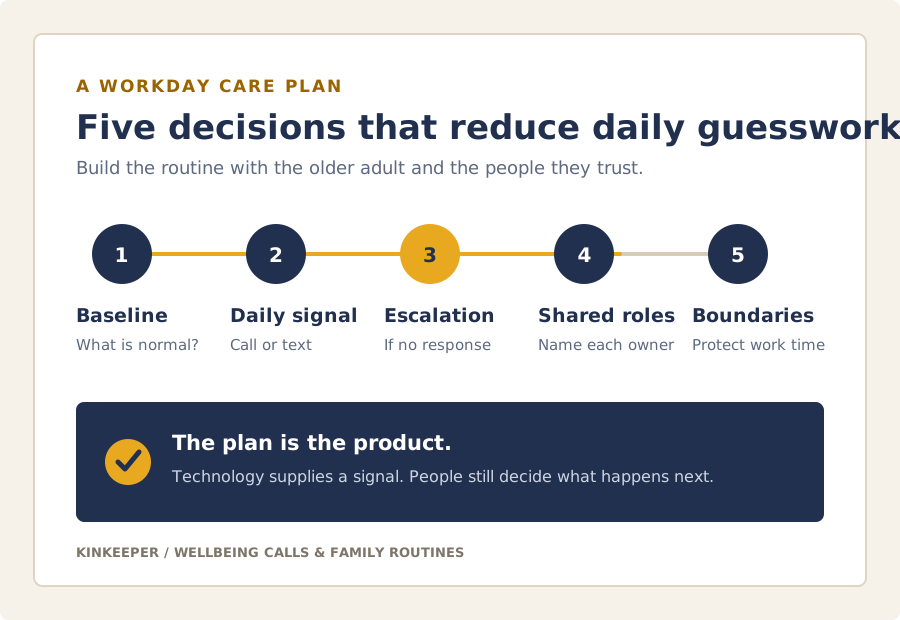
1. Build a baseline before you build alerts
You cannot tell what changed if no one has agreed on what is normal. Start with a calm conversation, preferably before a stressful event.
Ask your relative what an ordinary week looks like:
- When are they usually awake, out of the house, or resting?
- Which family members, friends, neighbors, or community contacts do they trust?
- Are there appointments, recurring activities, or travel plans that could explain a missed call?
- What kind of help do they welcome, and what feels intrusive?
- Who should have practical information such as key contacts, preferred hospital, building access, or pet-care instructions?
Write down only what the family genuinely needs. A care plan should reduce confusion, not become a collection of private details that everyone can access.
If starting the conversation feels awkward, use our guide to talking with an aging parent about help. Frame the plan around maintaining choice: “What would you want us to do if we could not reach you one morning?” is usually better than “We need to monitor you.”
2. Create one dependable daily signal
A daily check-in is a short call or text that asks an older adult to respond. It can be as simple as replying to a morning text or answering a scheduled call.
For a person living alone, that signal answers a narrow but important question: Did they respond today? If they do not, the family knows to follow the plan they agreed on, rather than discovering days later that no one has heard from them.
The routine should fit the older adult rather than forcing them to adopt a new device or complicated app. Choose:
- A channel they already use, such as a regular phone call or text.
- A time that fits their normal day.
- A reasonable window for responding.
- The people who should know the outcome.
KinKeeper Wellbeing Calls can provide a daily AI check-in call. The call can be a familiar conversation with Dovie, the KinKeeper caller persona, while a clear outcome and summary are shared with the person’s Kin Circle. If the person does not respond, the Kin Circle can be alerted and decide what to do next.
This is a wellness routine, not medical monitoring or emergency response. A confirmed check-in does not prove that nothing is wrong, and a missed check-in does not prove there is an emergency.
3. Write the no-response plan before you need it
The most useful part of a daily routine is not the ordinary “I’m okay.” It is knowing what to do when the expected signal is missing.
Create a short escalation ladder with your relative:
First: verify the ordinary explanations. Try the agreed follow-up call or text. Check whether they mentioned an appointment, visitor, travel, or a change in schedule.
Next: involve someone nearby. Contact the neighbor, friend, family member, building staff member, or caregiver your relative selected. Do not make one distant family member the only person who can act.
Then: match the response to the facts. If a trusted person can check in locally, start there. If available information suggests an immediate emergency, contact local emergency services. In a non-emergency situation where no trusted person can reach them, local authorities may be able to explain whether a welfare check is appropriate in that community.
Keep the plan short enough that someone can use it from a phone. Include names, roles, and current numbers. Review it when a relative moves, a neighbor changes, or health and mobility needs change.
Our guide on what to do when an older parent is not answering the phone walks through this moment in more detail.
4. Share roles by task, not by vague promises
“Call if you need anything” sounds supportive but leaves the primary caregiver assigning work during the crisis. Shared care works better when each person owns a specific lane.
One person might handle the daily check-in schedule. Another may keep the contact list current. A nearby relative can be the first in-person contact. Someone else can coordinate transportation, meals, bills, pet care, or appointment notes.
The CDC recommends asking family and friends for a specific caregiving task or block of time, and suggests a shared calendar for regular help. That specificity matters. “Can you call every Tuesday and Thursday?” is easier to answer and maintain than “Can you help more?”
A Kin Circle gives the trusted people around an older adult one shared view of daily check-in outcomes. It does not give the family permission to take over decisions. The older adult should know who is included and what they will see.
Financial help needs an equally specific boundary. If an older relative wants help with bills or banking, the Consumer Financial Protection Bureau explains the available options depend on the permission and role the account holder chooses. Agree on what one person may see, what they may do, and when the account holder wants to be asked first. Our guide to monitoring an aging parent’s finances without taking over shows how to make that review consent-led and read-only; it is not permission to share passwords or take control of money.
5. Protect parts of your workday
Constant partial attention is difficult for both work and care. Decide which interruptions really require you and which can wait for a planned care window.
Try three boundaries:
- A care window: Reserve a predictable time before work, at lunch, or after work for routine calls, forms, and coordination.
- A true escalation channel: Ask family not to mark every update urgent. Decide which situations justify interrupting a meeting or leaving work.
- A backup owner: For periods when you cannot respond, name the person who receives the first call.
This is not about becoming unavailable. It is about making availability intentional. A routine can also help your manager understand what you are requesting: a shifted start time on appointment days is clearer than a general warning that “something may come up.”
Use our private Caregiver Strain Check if you want a short reflection on the load you are carrying. It is not a diagnosis, and your answers stay in the experience.
6. Ask your employer precise questions
Do not assume that a benefit does or does not exist based on the employee handbook summary. Ask human resources or your benefits team about the exact situation in front of you.
Useful questions include:
- Is there paid caregiving leave, personal leave, or a donated-leave program?
- Can I use flexible hours, a compressed schedule, or occasional remote work?
- Does our employee assistance program include caregiver navigation or counseling?
- Are backup-care, care-management, legal, or financial-consultation benefits available?
- What documentation is required, and who will see it?
- Could federal, state, or local leave protections apply?
Under the federal Family and Medical Leave Act, eligible employees of covered employers may take unpaid, job-protected leave for qualifying reasons, including care for a parent, spouse, or child with a serious health condition. Eligibility rules, employer coverage, family definitions, and certification requirements matter. Some state and local programs are broader.
Caregiver status alone is not a protected category under every federal employment law. The EEOC explains that caregiver discrimination can still violate federal law when treatment is based on a protected characteristic, such as sex, race, or association with a person with a disability. This guide is general information, not legal advice; use the Department of Labor, your state labor agency, HR, a union representative, or qualified counsel for your circumstances.
7. Use local help before the family reaches a breaking point
Family support does not have to come only from relatives. The U.S. Administration for Community Living says the National Family Caregiver Support Program can connect eligible caregivers with information, access assistance, counseling, training, respite, and limited supplemental services.
The Eldercare Locator can connect families to Area Agencies on Aging and community organizations. KinKeeper’s free Care Directory is another starting point for finding local aging and reassurance resources by area.
Ask for one practical form of support first. Transportation twice a month, a regular neighbor visit, a meal program, or a few hours of respite may be more sustainable than waiting until the family needs an all-or-nothing solution.
A sample plan for a working family
Here is what a lightweight arrangement might look like:
Every morning: Dad receives a KinKeeper check-in call at 9:00. The result goes to his Kin Circle.
If he does not respond: The system follows the configured check-in flow, then the family uses its plan. His daughter calls after her first meeting; if she cannot reach him, his nearby friend checks the house.
During the week: One sibling owns appointments and transportation. Another keeps the shared contact list current and, only with Dad’s permission, brings agreed account changes to a planned review. Dad chooses which summaries and financial details—if any—the family can see.
At work: His daughter uses a 20-minute lunch window for routine coordination. The nearby friend is the backup during client meetings.
Once a month: The family asks what is working, what feels intrusive, and whether any contact or routine has changed.
The names and timing will be different for every household. The structure is what matters: one signal, one escalation plan, specific owners, and regular consent.
What technology can and cannot do
Technology is useful when it removes a repetitive task, shares a clear outcome, or helps the family notice a change. It is less useful when it creates more notifications than anyone can interpret or asks an older adult to learn a system they do not want.
A daily check-in service can:
- Reach someone at a consistent time by call or text.
- Share a check-in outcome with selected people.
- Reduce the need for one family member to place the same routine call every day.
- Give the family a clear moment to use its no-response plan.
It cannot determine that a person is medically safe, detect every fall or urgent situation, replace emergency services, or substitute for in-person and professional support. The best system combines a simple tool with people who know what to do.
Start with a 20-minute family setup
You do not need to solve the next ten years tonight. Start with this week:
- Ask your older relative what kind of daily signal would feel useful rather than intrusive.
- Choose the time and channel.
- Name the first two people to contact after a missed response.
- Give one recurring task to someone else. If it involves money, agree on the account holder’s permission and the exact review boundary first.
- Ask HR one specific benefits question.
- Put a date on the calendar to review the plan.
If a daily call would remove one recurring task from the workday, see how KinKeeper Wellbeing Calls work or join the Wellbeing waitlist. Confirm current recurring-text availability before choosing a plan. Your family can start with a simple routine and adjust it together.
Sources and review note
This guide was published July 18, 2026 and updated July 28, 2026 to connect its shared-role routine to consent-led financial review. It should be reviewed by July 2027, or sooner if federal leave guidance, financial-institution guidance, or KinKeeper product availability changes. Key sources include:
- Family Caregivers of Adults Age 50-plus, AARP and National Alliance for Caregiving, July 2026.
- Working While Caregiving summary, National Alliance for Caregiving and AARP, 2025.
- Family Caregivers: Information on the FMLA, U.S. Department of Labor.
- Healthy Habits: Caring for Yourself When Caring for Another, CDC, September 2024.
- National Family Caregiver Support Program, Administration for Community Living.
- EEOC caregiver responsibilities Q&A, U.S. Equal Employment Opportunity Commission.
Frequently asked questions
How can I care for an aging parent while working full time?
Build a small, repeatable system instead of trying to stay constantly available. Agree on a daily signal, write down what happens when there is no response, divide specific jobs among trusted people, and ask your employer which leave and flexibility options actually apply to you.
How often should I check on an older relative who lives alone?
There is no single schedule that fits everyone. Many families use one dependable daily check-in, plus ordinary family conversations and in-person visits based on the person's health, preferences, support network, and recent changes. The older adult should help choose the routine whenever possible.
What should happen if an older relative misses a daily check-in?
Follow a plan agreed in advance. That may include another call or text, contacting a nearby trusted person, checking known appointments, or requesting appropriate local help when the facts warrant it. A missed response does not automatically mean there is an emergency.
Does FMLA cover caring for an aging parent?
Eligible employees of covered employers may be able to use unpaid, job-protected FMLA leave to care for a parent, spouse, or child with a serious health condition. Eligibility and family definitions matter, so review current U.S. Department of Labor guidance and your employer's policy rather than assuming coverage.
Can a daily check-in service replace family or professional care?
No. A daily check-in can provide a consistent signal and help a family notice a missed response, but it is not medical monitoring, emergency response, in-home care, or a substitute for professional advice and local support.

Stay informed
Know they checked in today
Join the waitlist for Wellbeing launch and product updates.
Waitlist updates · No payment required · Unsubscribe anytime